Begonia 'Pink Spot' - Pink Polka Dot Begonia
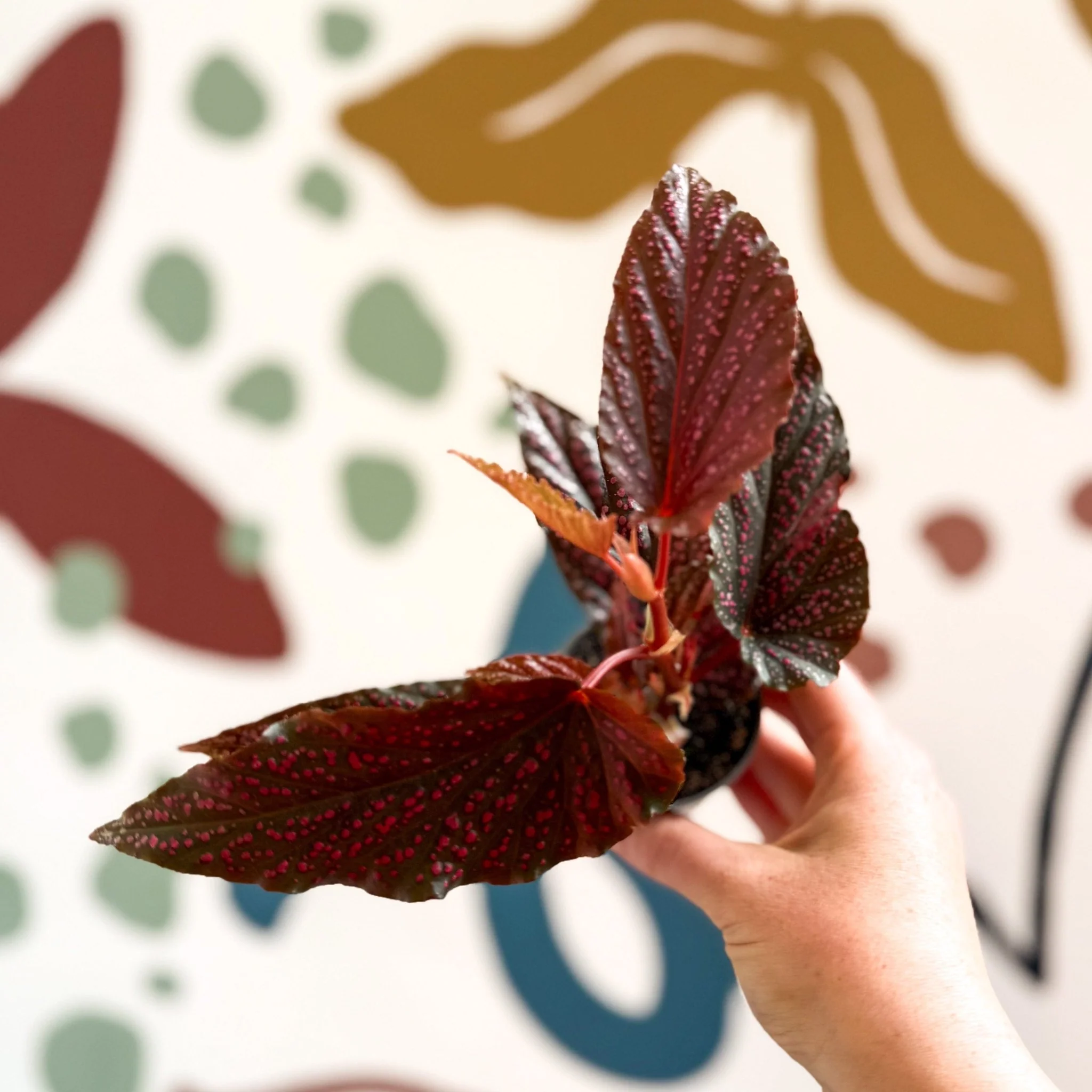
With playful pink speckles scattered across its rich green leaves, Begonia ‘Pink Spot’ is a striking variety that adds instant colour and charm to any indoor plant display. Its leaves are softly textured and asymmetrical, often with a subtle iridescence, and the plant forms a bushy shape that works beautifully on a shelf, side table, or grouped with other begonias. A standout choice for those who love unique foliage, it offers visual interest all year round with the bonus of delicate blooms in the warmer months.
Scientific Name
Begonia ‘Pink Spot’ (Begonia = named after Michel Bégon, a French patron of botany; cultivar: ‘Pink Spot’ for its distinct spotted leaves)
Common Name
Pink Spot Begonia, Polka-Dot Begonia (Pink), Spotted Begonia
Origin
The Begonia genus includes over 2,000 species, primarily from tropical and subtropical regions of Central and South America, Africa, and Asia. ‘Pink Spot’ is a cultivated hybrid selected for ornamental foliage.
Light
Prefers bright, indirect light. Avoid direct sunlight, which can scorch the leaves. Too little light may cause the pink spots to fade or the plant to grow leggy.
Water
Water when the top 2–3 cm of soil feels dry. Keep the soil lightly moist, but never soggy. Water around the base and avoid wetting the leaves, as they can be sensitive to spotting and mildew.
Humidity
Enjoys moderate to high humidity. Use a pebble tray, mist occasionally (away from the leaves), or keep near other plants to raise humidity naturally.
Soil
Use a light, well-draining potting mix, such as a blend of houseplant compost with added perlite or fine bark. Good drainage is key to preventing root rot.
Food
Feed every 4–6 weeks during spring and summer with a diluted, balanced fertiliser. Stop feeding in winter when growth slows.
Temperature
Thrives between 18–24°C. Avoid cold draughts, sudden temperature drops, or placing near heaters.
Pet-safe
No – like most begonias, it is toxic if ingested by pets or humans.
Sprouts Top Tips
To keep your begonia compact and bushy, pinch back leggy stems and remove spent flowers. The pink spots become more vibrant in stable, bright conditions with good humidity.
With playful pink speckles scattered across its rich green leaves, Begonia ‘Pink Spot’ is a striking variety that adds instant colour and charm to any indoor plant display. Its leaves are softly textured and asymmetrical, often with a subtle iridescence, and the plant forms a bushy shape that works beautifully on a shelf, side table, or grouped with other begonias. A standout choice for those who love unique foliage, it offers visual interest all year round with the bonus of delicate blooms in the warmer months.
Scientific Name
Begonia ‘Pink Spot’ (Begonia = named after Michel Bégon, a French patron of botany; cultivar: ‘Pink Spot’ for its distinct spotted leaves)
Common Name
Pink Spot Begonia, Polka-Dot Begonia (Pink), Spotted Begonia
Origin
The Begonia genus includes over 2,000 species, primarily from tropical and subtropical regions of Central and South America, Africa, and Asia. ‘Pink Spot’ is a cultivated hybrid selected for ornamental foliage.
Light
Prefers bright, indirect light. Avoid direct sunlight, which can scorch the leaves. Too little light may cause the pink spots to fade or the plant to grow leggy.
Water
Water when the top 2–3 cm of soil feels dry. Keep the soil lightly moist, but never soggy. Water around the base and avoid wetting the leaves, as they can be sensitive to spotting and mildew.
Humidity
Enjoys moderate to high humidity. Use a pebble tray, mist occasionally (away from the leaves), or keep near other plants to raise humidity naturally.
Soil
Use a light, well-draining potting mix, such as a blend of houseplant compost with added perlite or fine bark. Good drainage is key to preventing root rot.
Food
Feed every 4–6 weeks during spring and summer with a diluted, balanced fertiliser. Stop feeding in winter when growth slows.
Temperature
Thrives between 18–24°C. Avoid cold draughts, sudden temperature drops, or placing near heaters.
Pet-safe
No – like most begonias, it is toxic if ingested by pets or humans.
Sprouts Top Tips
To keep your begonia compact and bushy, pinch back leggy stems and remove spent flowers. The pink spots become more vibrant in stable, bright conditions with good humidity.
Original: $16.09
-65%$16.09
$5.63Description
With playful pink speckles scattered across its rich green leaves, Begonia ‘Pink Spot’ is a striking variety that adds instant colour and charm to any indoor plant display. Its leaves are softly textured and asymmetrical, often with a subtle iridescence, and the plant forms a bushy shape that works beautifully on a shelf, side table, or grouped with other begonias. A standout choice for those who love unique foliage, it offers visual interest all year round with the bonus of delicate blooms in the warmer months.
Scientific Name
Begonia ‘Pink Spot’ (Begonia = named after Michel Bégon, a French patron of botany; cultivar: ‘Pink Spot’ for its distinct spotted leaves)
Common Name
Pink Spot Begonia, Polka-Dot Begonia (Pink), Spotted Begonia
Origin
The Begonia genus includes over 2,000 species, primarily from tropical and subtropical regions of Central and South America, Africa, and Asia. ‘Pink Spot’ is a cultivated hybrid selected for ornamental foliage.
Light
Prefers bright, indirect light. Avoid direct sunlight, which can scorch the leaves. Too little light may cause the pink spots to fade or the plant to grow leggy.
Water
Water when the top 2–3 cm of soil feels dry. Keep the soil lightly moist, but never soggy. Water around the base and avoid wetting the leaves, as they can be sensitive to spotting and mildew.
Humidity
Enjoys moderate to high humidity. Use a pebble tray, mist occasionally (away from the leaves), or keep near other plants to raise humidity naturally.
Soil
Use a light, well-draining potting mix, such as a blend of houseplant compost with added perlite or fine bark. Good drainage is key to preventing root rot.
Food
Feed every 4–6 weeks during spring and summer with a diluted, balanced fertiliser. Stop feeding in winter when growth slows.
Temperature
Thrives between 18–24°C. Avoid cold draughts, sudden temperature drops, or placing near heaters.
Pet-safe
No – like most begonias, it is toxic if ingested by pets or humans.
Sprouts Top Tips
To keep your begonia compact and bushy, pinch back leggy stems and remove spent flowers. The pink spots become more vibrant in stable, bright conditions with good humidity.